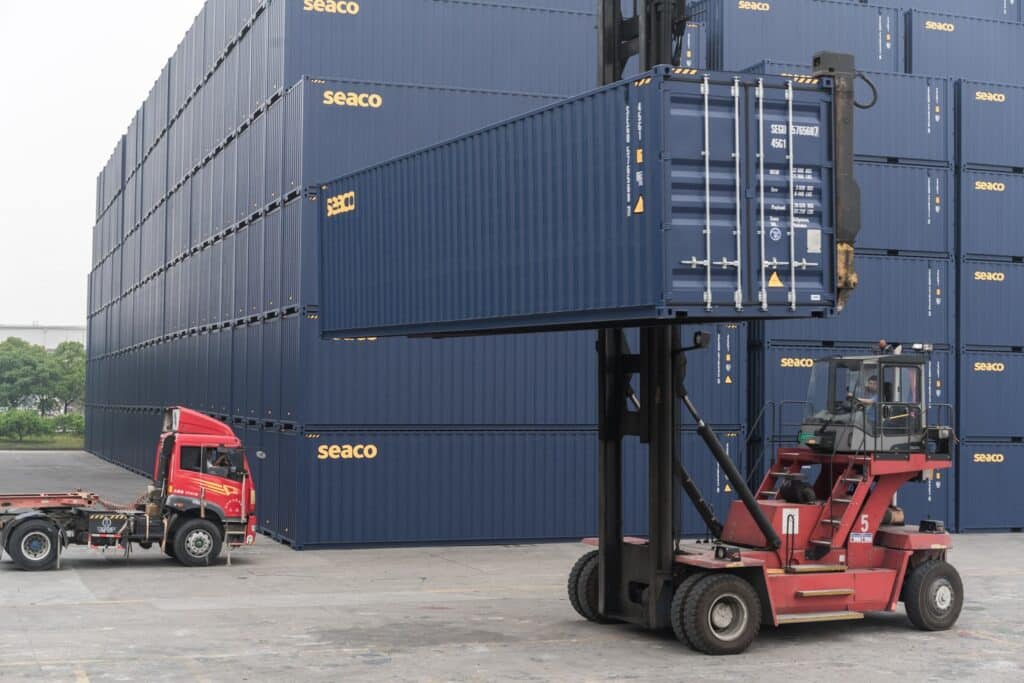
 EXPORT / CONTAINER SHIPPING · REFERENCE IMAGE
An export shipment depends on more than securing container space. Cargo readiness, equipment suitability, documentation and port deadlines all need to line up. This illustrative scenario follows an exporter preparing packed cargo for an international container movement.
Matching equipment to the shipment
Planning begins with the cargo dimensions, total weight, packaging and loading method. A standard dry container or a High Cube option can then be assessed against the actual load and any stowage needs. The selected equipment, payload limits and availability are confirmed before the shipping plan is finalized.
The sailing plan is coordinated with the cargo-ready date, pickup window and applicable port cut-offs. Export paperwork and shipment details are reviewed early so that missing information can be resolved before handover, rather than interrupting the movement at the terminal.
How the export plan comes together
Illustrative stages; sailing and equipment depend on confirmed cargo and carrier availability.
- 01Review cargoDimensions, weight & packing
- 02Select equipmentContainer fit & availability
- 03Prepare exportPickup, documents & cut-offs
- 04Complete handoverPort delivery & destination
Keeping each handover aligned
Pickup, container loading, transport to port and terminal delivery are arranged as connected parts of the same movement. The parties involved receive the relevant timing and shipment information, while the documents and cargo details are checked for consistency at the required stages. Any local handling or destination responsibilities are clarified as part of the agreed scope.
In this illustrative outcome, the cargo moves within the agreed shipment scope and the destination handover is confirmed. Actual transit, sailing, handling and delivery results depend on the route, carrier schedule, cargo readiness and verified project arrangements.